• Landing Page
  • Home
  • Take Control Tuesday
  • Blog Money Smart Lifestyle Moments Blog
  • About us
  • Money can be Funny Gallery
  • Other Blogs and Voices
    • How Much Does It Cost You To Work
    • Detroit Praise Network Blog
    • Better Money Habits
  • New Page
  • Blog
  • Landing Page
  • Home
  • Take Control Tuesday
  • Blog Money Smart Lifestyle Moments Blog
  • About us
  • Money can be Funny Gallery
  • Other Blogs and Voices
    • How Much Does It Cost You To Work
    • Detroit Praise Network Blog
    • Better Money Habits
  • New Page
  • Blog
  MONEYSMARTLIFE.ORG EMPOWERING SUSTAINABLE FINANCIAL WELL-BEING IN WORKING CLASS FAMILIES
  • Landing Page
  • Home
  • Take Control Tuesday
  • Blog Money Smart Lifestyle Moments Blog
  • About us
  • Money can be Funny Gallery
  • Other Blogs and Voices
    • How Much Does It Cost You To Work
    • Detroit Praise Network Blog
    • Better Money Habits
  • New Page
  • Blog

the MoneySmartLife.org Lifestyle blog

Empowering sustainable financial well-being for working class families
Picture

    Archives

    May 2020
    April 2020
    March 2020
    February 2020
    January 2020
    December 2019
    November 2019
    October 2019
    September 2019
    August 2019
    July 2019
    May 2019
    April 2019
    November 2018
    May 2018
    April 2018
    March 2018
    February 2018
    January 2018
    December 2017
    November 2017

    Notify me of new blog posts

    Categories

    All
    Borrowing
    COVID 19
    COVID-19
    Credit
    Debt
    Financial Capability
    Financial Well Being
    First Time Home Buyer
    Max Income
    Protecting
    Savings
    Spending
    Taxes

    join money smart lifers

    RSS Feed

    Mansa Musa Trusted Advisor First time home buyer

    Author

    Mansa Musa is a homeownership counselor and homebuyer educator. He is currently the Principal at MoneySmartLife.org. He blogs and speaks on subjects of financial well-being and financial capability. Helping working class families live a sustainable MoneySmartLife through pragmatic solutions and behavior changes.

Back to Blog

How to get a utility bill credit for outage or damage - 3 types are available

10/27/2019

 
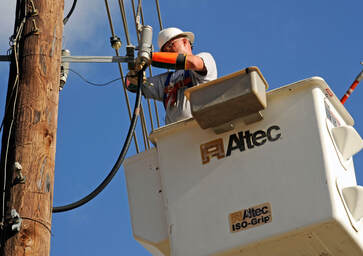
Lineman working
Power outages and interruptions happen. If they happen often enough or for long enough you could be eligible for compensation from DTE and Consumers Energy. The Michigan Public Service Commission (MPSC) Service Quality and Reliability Standards requires utility companies to compensate customers for losses associated with power outages. Rules regarding outage service credits and eligibility requirements can be found in the MPSC’s Service Quality and Reliability Standards. These standards provide customers a $25 credit upon request if the utility’s investigation of your request determines you have experienced a qualifying outage.
​
There are 3 types of available credits:
  1. Catastrophic conditions A customer is eligible for a credit under catastrophic conditions if the utility fails to restore service within 120 hours. A catastrophic condition is defined as an event that results in an official state of emergency or an event that results in an interruption, of 10 percent or more, of a utility’s customers. Customers need to notify their electric utilities of the outage. 
  2. Normal conditions A customer is eligible for a credit under normal conditions if the utility fails to restore service within 16 hours after an outage resulting from conditions other than catastrophic conditions. Customers need to notify their electric utility of the outage. 
  3. Frequent repetitive interruptions A customer is eligible for a credit for repetitive interruptions if experiencing more than seven interruptions in a 12-month period. Customers need to notify their electric utility of all service outages.
As a customer you need to complete the following steps:
  • record the date and time of each outage
  • record when the company was notified of the outage, and how the company was notified
  • document when the service was restored.
  • File your claim with DTE or Consumers Energy 
​To file a claim for damages caused by an outage with DTE you need a different claim form. Consumers Energy may use the same form as for outages. When the damage is caused by an act of nature—such as a storm, wind or lightning—the utility is not legally responsible. Check with your homeowner’s, renter’s or business insurance policy to see if your losses are covered. Most are, minus the deductible.
An investigation will be conducted and a decision will be rendered within 30 days. Your claim will be summarily denied if: 
  • You are not the customer of record or the owner of the damaged property.
  • Storms/Outside Interference - the utility will not be responsible for damages or losses resulting from weather-related conditions.
  • Equipment Failure - The utility will not be responsible for damages or losses beyond their control unless it fails to exercise reasonable care and skill in furnishing the service.
You don’t have to wait for an outage to save on your utility bills. Here are some “semi-secret” discounts available, if you ask.

0 Comments
Read More
Back to Blog

Stop spending leaks 5 fees to never pay again

10/7/2019

 
Money spending
Where does the money go? Answer: holes in your spending plan or spending leaks. 
A spending leak is an uncontrolled expenditure of resources. Spending leaks are caused by a variety of reasons, both personal and economic. Common examples of spending leaks are susceptibility to impulse purchases, routinely paying credit card interest, or using energy inefficiently. Whether small or large, leaks add up and reduce the chances of achieving your goals.  Sometimes spending leaks are hidden or camouflaged. So they have to be discovered. Others are more apparent. Once discovered spending leaks must be fixed.
​
Fixing a spending leak may be quick or require a long term behavior change. All are repairable with varying degrees of difficulty. Here is one spending leak repair that is sustainable. It is a behavior change that eliminates a leak for a lifetime. Make a quality decision to Stop Paying Fees. A quality decision is one from which there is no retreat. Most people don’t make a lot of those in their lives. Nor should they.  But you can on this one. Just set your jaw, head down, and just do it.

Fees are not interest. They are other charges for privileges or penalties you have accessed through your actions. If you don’t access them, you don’t pay. It may take a strategy and some time to sustainably eliminate all fees but it can be done.I have for decades. 

Here are 5 fees to never pay again. When it comes to my money I see paying these fees as a self-inflicted wound. Those are the worse kind. I decided to stop hurting myself on purpose.
  1. Late payment fees Stop paying your mortgage, rent, insurance, and utilities (cell phone, cable, electric, gas, etc.) late enough to incur a late fee. Yes, paying before the next billing cycle and not getting delinquency on your credit report is a very good thing. But paying an extra fee for being late is not. Credit cards not only have interest but late fees. Most credit card interest rates are usurious already so paying to be late makes “worse matters worst.” Another benefit of not paying late fees is your monthly cash flow and disposable income increase. This provides for a greater sense of financial well-being.
  2. Traffic, parking, and civil fines The behaviors that cause these fees are generally under our control. Simply, obey the laws. Even in a high-enforcement area, if you don’t break the law, you shouldn't be cited. However, no one is naive enough to believe that. The next step is to challenge all civil citations. Have your day in court. (MINOR CIVIL NON-CRIMINAL INFRACTIONS ONLY. IF YOU NEED A LAWYER. GET ONE. NOT FOR DUI) Taking the matter to this level is an investment of your time as a citizen to interact with your local government. If efficient, the worst that happens is going to be whatever the best deal that you can negotiate for yourself. If your local government is inefficient, then you may win a default judgment and owe nothing. Be mindful, there could be collateral damage to your insurance premiums and credit rating after a traffic conviction.
  3. Overdue rental fees on video, cars, libraries, etc. Just get the item back on time. 
  4. Bank fees require vigilance because for most banks they produce significant revenues. Always be on the lookout for no-fee checking and savings account relationships appropriate to your household income. Some bank’s fee structure may be hostile to “low volume, low activity accounts.” The translation is: “you can’t maintain a minimum balance or have sufficient account activity for the bank to make a profit on your money.” Once you have the right-sized bank relationship, be proactive in eliminating all fees such as overdraft, ATM, and cash advances. Make sure checking and savings remain free or you are actually using most of the benefits of the “premium” relationship. You can change financial services product options and maintain the relationship’s longevity. Longevity is often a positive factor when accessing financial services.
  5. Convenience fees for tickets or meal delivery. This one is more fluid. But my default position is no fee. If I am hungry, I pick it up or cook. Is there another cheaper way to get that ticket? Do I even have to go? My fee aversion has saved a me ton of money by forcing me to an more cost effective option. 
Stop paying fees. It’s like giving away your money without any of the benefits of philanthropy.


0 Comments
Read More
Back to Blog

Holiday  Overspending Isn't Inevitable

9/16/2019

 
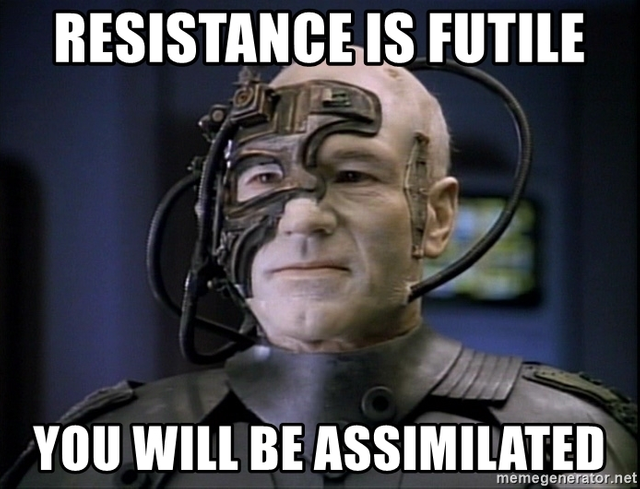
PictureThe retail-commercial complex are like the Borg. relentless
Many household budgets are still in recovery from '"back to school" spending. Some of us don't even want to hear anything about money right now, especially spending more of it. But now is the time to prepare for one of the biggest challenges to your family finances, the Holidays' spending.

The retail-commercial-complex is preparing to launch all-out massive assaults on our minds, money, and happiness. Buy,buy, buy.... "Resistance is futile. Assimilate or be destroyed."
Here are three things you can do.

BUY MEMORIES NOT THINGS.
It’s almost impossible not to spend money in the USA during holiday time because of the opportunities, the social approval and the messaging to do so are limitless. It now starts with Halloween in early October. Followed immediately by Christmas and its’ greedy spawns: Black Friday, Cyber Monday, Small Business Saturday, Doorbusters, after Christmas clearance sales, etc. It finally winds down in very early January. About 94 days of hyper-consumerism and conspicuous consumption run amok.


Americans spent $707.5 Billion during the holidays in 2018. You are not immune. Since you are going to buy something anyway, buy something that lasts. Most people remember experiences longer than things. Is the preponderance of your fondest memories experiences or things? Special experiences with friends and family will be treasured by both the Giftee and the Gifter. Remember experiences don’t just have to be good to be memorable.

HAVE A PLAN BEFORE THE SEASON BEGINS.
Don’t go into this financially hazardous season unprepared. Have plan. Decide how much you will spend for the holidays. People spend money during the holidays on food for celebrations, eating in and out, decorations, gasoline for holiday-related travel to events, errands, and visits. 

These expenditures are over and above the normal monthly spending required. The average American family spent over $800 in 2018 on such items.  Oh yeah, don’t forget the money for gifts.

It is important that you take control of your spending decisions. If you don’t, your spending decisions will control you. Holiday hangover debt is never fun and last longer than the one from that great New Year’s Eve party.


Now that you decided how much you are going to spend. The next step is to decide how you are going to spend it. Will you use only cash or will you borrow from credit cards? If you have to borrow for holiday spending, you need to make sure it is not financially self-defeating. You also can make additional income to cover your holiday spending plan.

6 Things To Consider When Planning Your Holiday Spending
  1. How many people do you want to purchase gifts for? How much do you want to spend on each person?
  2. Are you going to host a holiday party?
  3. Will you have family or friends flying in to spend time over the holidays? How many people? How much will you need to spend?
  4. Will you be traveling to visit friends or family? Car or airplane? How much will it cost?
  5. Are you going to participate in company gift exchanges or holiday school activities for your children?
  6. Are you going to gift to your neighbors?

STICK TO THE PLAN.
Now that you have a plan. Stick to it. Believe me, that is far, far easier said than done. Because of the aforementioned messaging and social approval, it is HARD NOT to impulsively spend money during this time of year. Try as you might, you just get worn down and succumb. Let’s face it, buying stuff feels good. That’s the part of consumer psychology that retailers and advertisers have mastered and prey on.

Start implementing your plan early. That could include researching planned holiday purchases or buying before the holiday rush. Perceived time constraints can add to the holiday stress of gift-giving and food preparation forcing bad spending decisions. Look for seasonal employment to cover additional expenses.

​Here are 10 Tips For Cutting Your Holiday Spending.


0 Comments
Read More
Back to Blog

Here is a very non-exhaustive list of the things that will cost you more because of the tariff war with China with a link to the full list.

5/14/2019

 
Picture
The recent announcement of increased tariffs on Chinese goods will increase the price for thousands of consumer goods that are purchased every day. Here is a very abbreviated list:

On The List
  • TV
  • Cell phones
  • DVR
  • Tablets
  • Kitchen Appliances
  • Air Conditioners
  • Furniture
  • Auto Parts
  • Luggage
  • "Outdoor Gear, Like Travel Bags, Backpacks And The Knit Fabric Used In Fleece Vests"
  • Dog Collars
  • Baseball Mitts
  • Ski Gloves
  • Sledgehammers
  • Saw Blades
  • Lighting Fixtures
  • Toilet Paper
  • Art Supplies
  • Ceramic Tiles
  • Windshield Glass
  • Antiques That Are More Than 100 Years Old
  • Cd Players and Cd Cases (Really! Is anyone still buying Cd stuff?)
  • Cassette Tapes And Cassette Players (See above)
  • Apparel Made From Reptile Leather
  • Wooden Shingles
  • Dyed Knitted Or Crocheted Cotton Fabrics
  • Anvils
  • Mattress Supports
  • Christmas Tree Lights (Bah humbug)
  • Cabbage
  • Kale
  • Carrots
  • Beets
  • Hundreds Of Types Of Fish
  • Mustard Seeds
  • Stuffed Pasta, Whether Cooked Or Otherwise Prepared Or Not
  • Olives (Not Green), In A Saline Solution, In Airtight Containers Of Glass Or Metal But Not Canned
  • Strawberry Jam
  • Rice Wine Or Sake
  • Soy Sauce

Not On The List
  • Clothing — From Tariffs
  • Highchairs
  • Infant Walkers And Other Baby Items.
  • Alaskan-caught Fish That Are Exported To China For Processing And Then Reimported To The United States.​
Link To Full U.S. Government Tariff List (196 Page Pdf)
Source https://www.nytimes.com/2019/05/10/business/china-tariffs-list.html
0 Comments
Read More
Back to Blog

JUST DO THE ARITHMETIC and Get the most for your money

4/30/2019

 
Picture
Picture
It is not just how much money you make; it's how much you keep that makes the difference in your life.

Getting the most for your money is one way to do that. Making the right buying decision is an important skill to master. And a great habit to develop. Here's a way to do that:

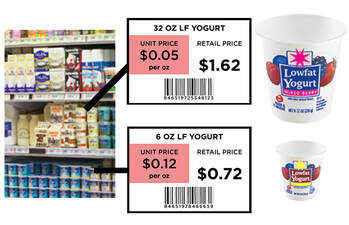
Comparison shop everything, all the time, not just the "big items." To do that successfully you must be able to compare prices on your most frequently purchased items. To do so, you must use Unit Pricing. You can compare “apples to apples” with the Unit Price. Here is how to know and evaluate the unit price:
  • Check the shelf tag.
  • Do the arithmetic. It's only arithmetic. It is not math.You know: just add, subtract, multiply, divide.
  • Use your phone's calculator and data storage functions to find and recall unit prices.
  • Don't assume bigger is always cheaper. Bulk, warehouse and other "value" sizes don't always have the lowest unit price.
  • Use Base Units for comparison
    • Oz
    • Gram
    • Liter
    • Pound/lb
    • Gallon
    • ​Sq ft
  • Be able to recall the numbers on your most purchased items
    • Organize and use your phone's data storage and recall capabilities
    • Delegate to different family members items that are important to them
      • Kids can keep track of the price  and find "deals" on their favorite foods, clothes, tech, travel, etc.

Click here to go the webinar
Webinar link
Webinar Link
0 Comments
Read More
<<Previous
Forward>>
Powered by Create your own unique website with customizable templates.